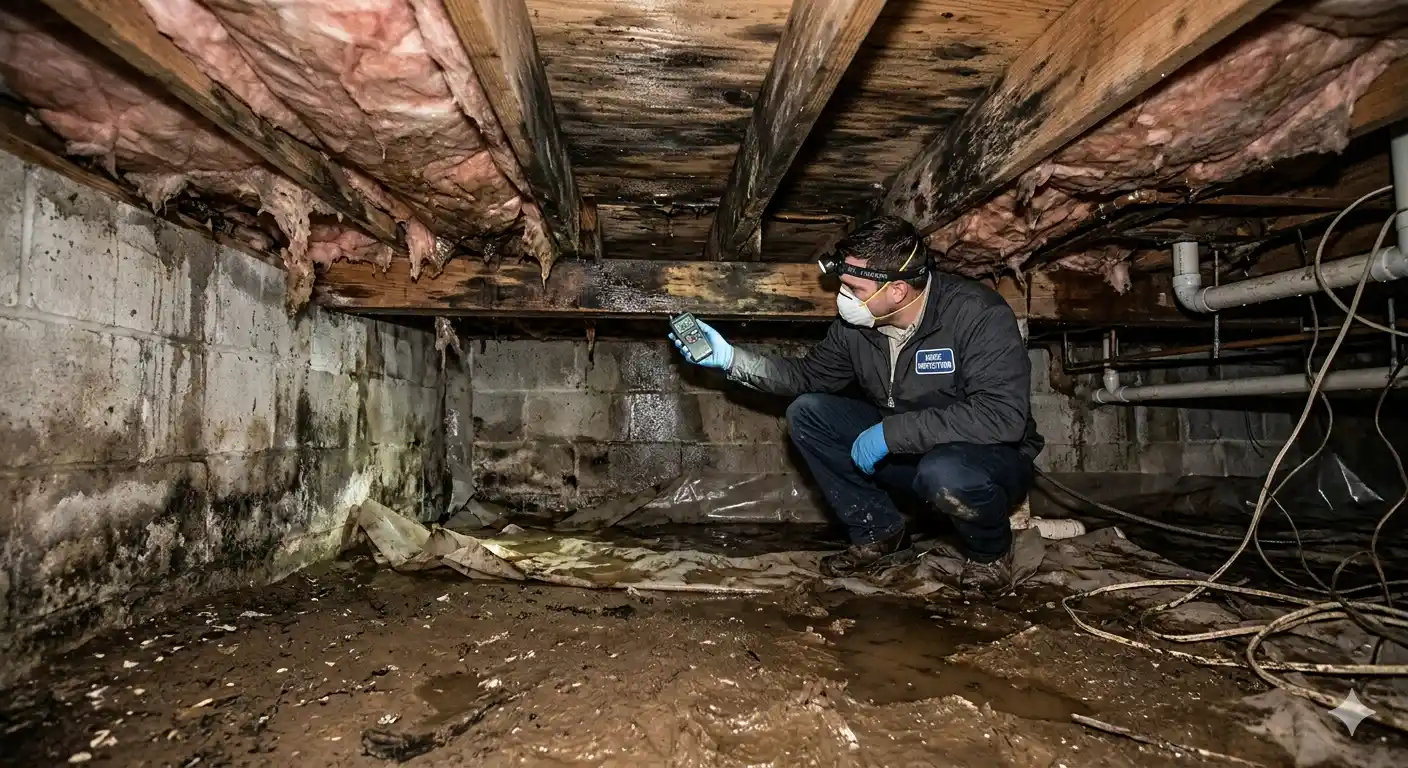
Dark marks on floor joists, subflooring or foundation walls can raise an immediate question: is this active mold, old staining, or residue from a moisture problem that ended years ago? Appearance alone does not always settle it.
Signs That Point to Active Growth vs. Old Staining
No single clue confirms it, but several conditions suggest a current moisture or mold problem.
Growth that appears raised, fuzzy or powdery is more concerning than a flat, defined mark.
New discoloration extending beyond an established stain can indicate ongoing moisture.
A musty smell, damp wood, soft wood, or condensation on ducts and pipes deserves a closer look.
Old staining is more often flat, dry and odorless, sometimes with a visible tide line from a past leak. White crystals on block or concrete may be efflorescence, a mineral deposit left as water moves through masonry, rather than mold.
What a Crawl-Space Evaluation Looks At
An evaluation may cover exposed wood and insulation, staining or growth patterns, plumbing and drainage issues, humidity and condensation, the condition of the ground covering, and signs of water entering from outside.
Look Beyond the Stain
The findings help determine whether the next step is moisture correction, cleaning or remediation, material removal, vapor-barrier work, or further testing.
Is Mold Testing Always Needed?
No. Testing may make sense when the source is unclear, when documentation is requested, or when a buyer or lender requires it. It may also help when visible conditions do not give the project team enough to go on.
The Scope Should Match the Property
Mold testing is not automatically required for every suspicious crawl-space condition. The evaluation should match the property and the purpose of the inspection.
Crawl-Space Findings During a Home Sale
Real-estate deals add pressure. A buyer may be waiting on an answer, a seller may have a closing date, or a home inspector may have flagged suspicious conditions without defining how far they extend.
Scheduling an evaluation early gives everyone time to review a written scope and coordinate any work instead of cramming decisions into the last days before closing.
A New Vapor Barrier Isn't the Whole Fix
Torn, displaced or incomplete ground covering can let ground moisture into the crawl space. Replacing or upgrading it may be part of the plan, but it cannot substitute for fixing leaks, drainage problems or other active moisture sources.
What to Do Before the Inspection
Disturbing the area can hide useful evidence and spread debris. If safe, photograph the area and note recent leaks or drainage changes.
Have the crawl space assessed before deciding what cleaning, remediation, moisture correction or vapor-barrier work is actually needed.
Schedule a Crawl-Space Evaluation
Mr. Restoration evaluates crawl-space mold and moisture concerns throughout Nashville and Middle Tennessee. If an inspection report flagged suspicious growth, staining, or a damaged vapor barrier, request an evaluation before deciding what the property needs.
Schedule a Crawl-Space Evaluation
Suspicious staining or mold? Get the crawl space evaluated before you decide what it needs.
615-257-8063