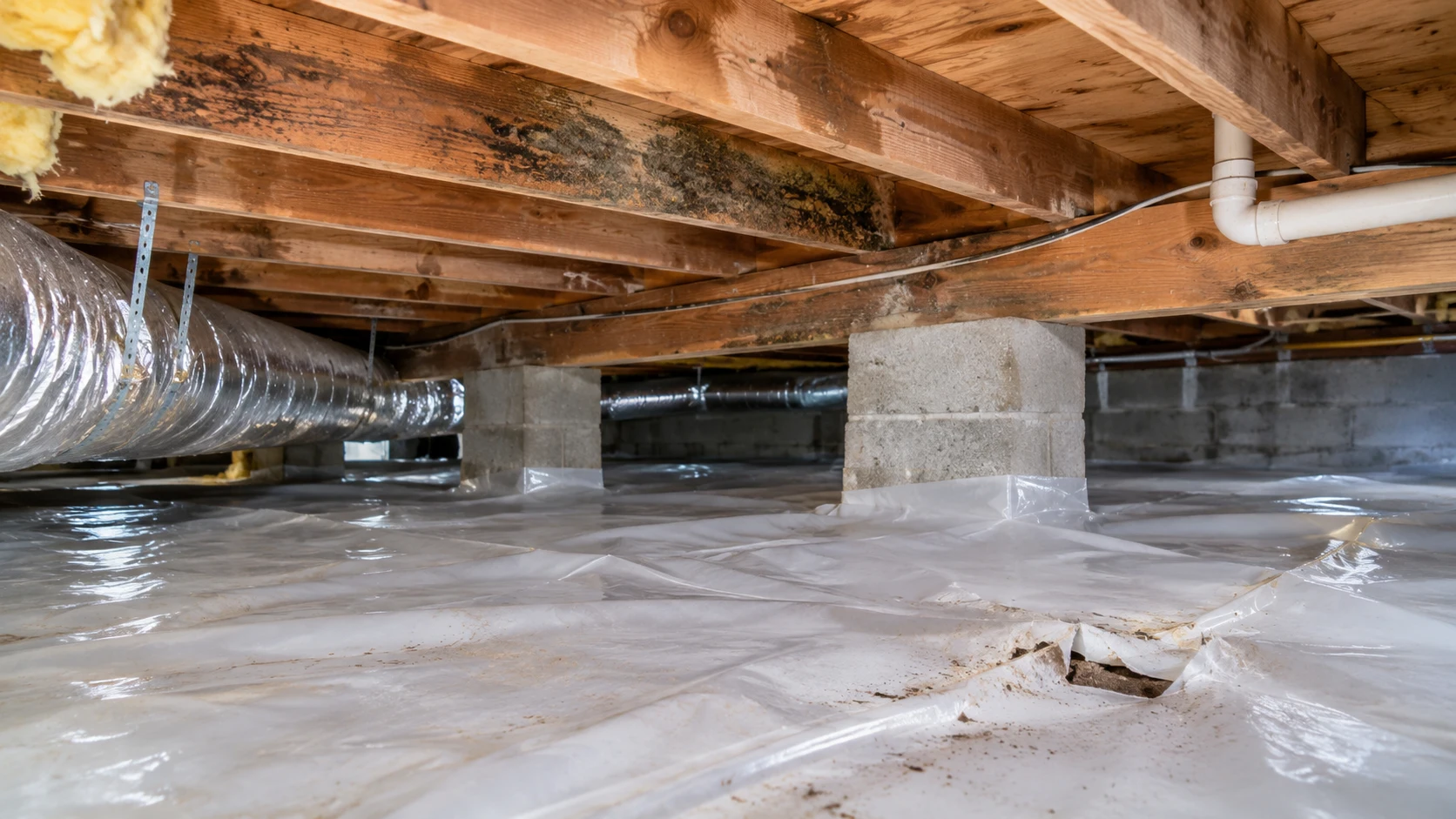
Discovering suspected mold in a crawl space does not automatically mean the vapor barrier needs to be replaced. The better question is whether the existing barrier is intact, properly installed, and still doing its job. If moisture is entering through plumbing leaks, poor drainage, or humid air, installing new plastic alone will not resolve the underlying problem.
What a Crawl Space Vapor Barrier Does
A ground vapor barrier limits the movement of moisture vapor from soil into the crawl space. It is one part of a moisture-control strategy. Seams, wall connections, punctures, and coverage all matter. Even a new barrier may perform poorly if water is collecting above it or if other moisture sources remain unaddressed.
Signs a Barrier May Need Repair or Replacement
A barrier may warrant attention if it is torn, missing across large areas, displaced, deteriorated, or installed in a way that allows significant exposed soil. Standing water on top of the barrier or damp framing nearby should prompt a broader investigation rather than an automatic replacement decision.
What Should Happen Before Installing a New Barrier?
First, determine why the crawl space is wet. Look for plumbing leaks, surface runoff, foundation drainage concerns, and humidity issues. Then evaluate affected materials and decide whether cleanup, drying, insulation work, or other repairs are needed. Installing a barrier over unresolved wet or contaminated conditions can conceal problems instead of fixing them.
Repair, Replace, or Consider a Broader Moisture-Control Plan?
A limited tear may be repairable. Extensive damage or poor coverage may justify replacement. In some homes, a more comprehensive approach to crawl space moisture management may be appropriate. The decision should be based on the crawl space conditions, not a one-size-fits-all package.
The Takeaway for Middle Tennessee Homeowners
If you have mold-like growth, damp insulation, or a persistent musty odor, request a crawl space moisture evaluation. Ask what caused the problem, which materials require attention, and how the proposed vapor barrier work fits into the overall plan. Mr. Restoration can discuss your crawl space concerns and the next step.
Frequently Asked Questions
Can mold grow on a vapor barrier?
Dust and debris on plastic surfaces can support growth when moisture is present. The underlying conditions and affected materials need evaluation.
Will a new vapor barrier remove a musty smell?
Not necessarily. Odors may persist if damp materials, leaks, or other moisture sources remain.
Is a vapor barrier the same as encapsulation?
No. A ground barrier is one component; encapsulation generally refers to a more comprehensive system whose design varies by property.
Should I remove the old barrier myself?
Avoid disturbing suspect contamination without understanding the extent and appropriate precautions. Seek professional guidance for significant mold or water damage.
Request an Evaluation
Concerned about water damage, mold, or persistent moisture? Contact Mr. Restoration to discuss the conditions you are seeing and arrange the appropriate next step. For active water intrusion, call promptly rather than waiting for damage to spread.