Fixing the roof, window, or exterior opening stops new water from coming in. It does not confirm that the ceiling, wall cavity, insulation, or framing dried correctly.
How Fast Can Mold Grow After a Leak?
Mold can begin growing on damp building materials within 24 to 48 hours. A leak that went unnoticed for days, or a wet area left to air dry behind drywall, deserves a closer look even after the repair is complete.
Don't Assume the Repair Means It's Dry
Stopping the source of the leak does not confirm that the ceiling, wall cavity, insulation or framing has dried correctly.
Warning Signs After the Leak Is Fixed
These signs do not prove how far the damage goes, but they are good reasons to investigate before repainting or closing a wall.
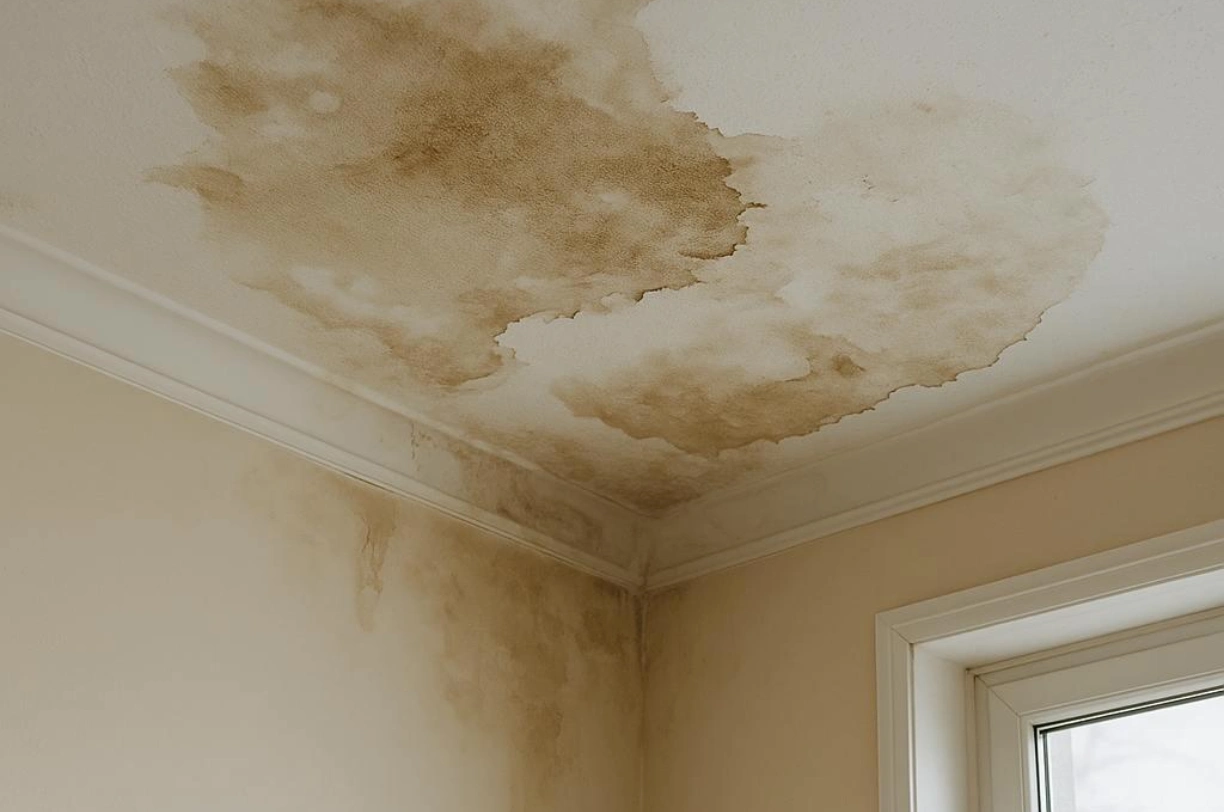
A ceiling stain that returns after painting can indicate moisture remains or has traveled beyond the original entry point.
These conditions can indicate that building materials were affected by the leak.
Odor near the leak, discoloration around window frames and warped flooring or baseboards deserve attention.
Why Painting Over a Water Stain Isn't Enough
A stain-blocking primer can hide the mark, but it does not dry material behind it. If drywall, insulation or framing is still damp, the problem can continue developing out of sight and may return as a stain, odor or visible growth.
Follow the Moisture Path
Water travels away from where it enters. The visible stain may be only part of the affected area, so the repaired opening and nearby spaces should be considered together.
What a Professional Inspection Checks
An inspection follows the moisture pathway. The evaluator may examine the repaired opening, nearby building materials, the area below the leak, and adjoining spaces where water could have traveled.
Moisture meters and thermal imaging can help find wet areas without opening walls unnecessarily. Selective access may be recommended when readings or visible conditions call for it.
The goal is to avoid two costly mistakes: opening walls that do not need it and sealing up an area that is still wet.
What Mold Remediation Involves
If remediation is needed, containment separates the work area from the rest of the property. The scope may include several steps:
Materials that cannot be adequately cleaned may need to be removed.
Surfaces that can be retained are cleaned as part of the remediation scope.
The work includes controlling dust and debris and drying the affected structure.
The moisture condition that caused the problem must be corrected before the area is closed up.
What to Gather Before the Appointment
Collect photos taken during the leak, repair invoices, prior inspection reports, and approximate dates for when the water entered and when the repair was completed.
That history helps the team understand the event and trace where moisture likely went.
Leak Fixed but Still Seeing Signs? Get It Checked
Mr. Restoration provides mold and water-damage evaluations for homes across Nashville and Middle Tennessee. If a roof, window or plumbing leak has been repaired but staining, odor or damaged material remains, schedule an inspection before covering the area.
Schedule an Inspection
Staining, odor or damaged material after a leak? Get the area checked before covering it.
615-257-8063