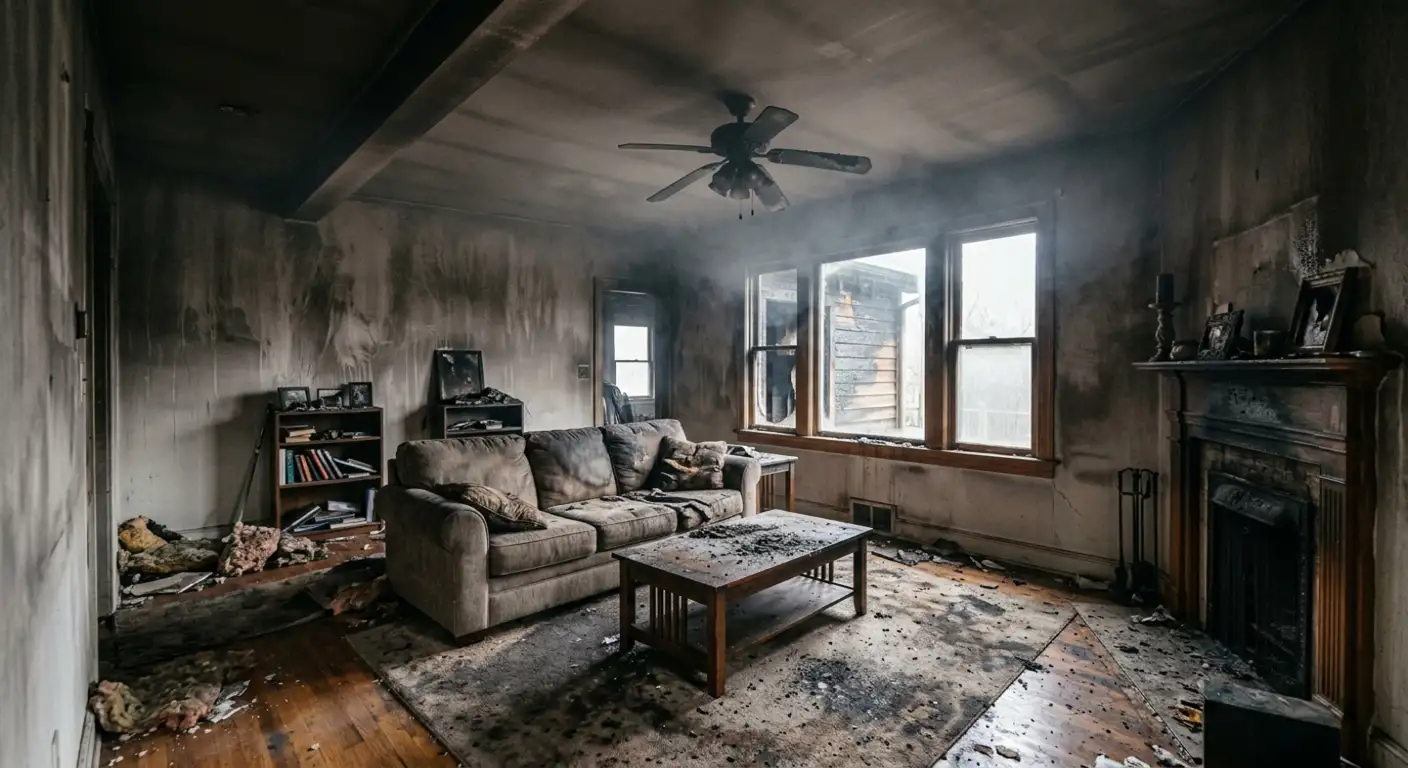
The fire trucks leave, the flames are out, and it's tempting to think the worst is over. It isn't. Smoke and soot keep working on your home long after the fire itself is gone, and the damage they cause is often worse than what burned. Here's what smoke damage actually does to your property and your health, and why waiting to deal with it costs you more.
Smoke Travels Further Than the Fire Does
A fire contained to one room can still fill the rest of the house with smoke. Microscopic soot particles ride the air through HVAC ducts and wall cavities, settling in rooms the flames never touched, which is why a kitchen fire can leave soot on bedroom ceilings and behind outlet covers two floors away.
Health Effects You Shouldn't Ignore
Smoke is a mix of fine particles and chemical byproducts, and breathing it in isn't harmless once the visible haze clears. Lingering residue can:
- Irritate eyes, throat, and lungs, especially in kids, older adults, and anyone with asthma
- Trigger headaches, coughing, and sinus irritation for days after a fire
- Leave toxic residue on surfaces people touch daily, from countertops to door handles
Symptoms don't always show up right away, which is part of why homeowners underestimate how much cleanup a "small" fire actually needs.
What Soot Does to Your Home
Soot is acidic, and the longer it sits, the more damage it does. Left untreated, it can:
- Permanently stain drywall, countertops, and flooring within hours
- Corrode metal appliances, electrical components, and HVAC parts
- Yellow or discolor curtains, upholstery, and carpet sometimes beyond saving
- Embed odor deep into insulation and wood framing
Why the first 24 hours matter
Soot becomes harder and more expensive to remove with every hour left on a surface. Buildup that could be cleaned on day one may require replacement by day three.
Why DIY Cleanup Usually Backfires
It's natural to want to start wiping things down, but household cleaners and vacuums often smear soot deeper into fabric and drywall or spread particles into the air. Professional remediation uses HEPA filtration, cleaning agents matched to the smoke type, and thermal fogging or hydroxyl treatment to remove odor at the source instead of masking it.
What To Do Right After a Fire
- Don't re-enter until the fire department clears the property
- Avoid running the HVAC system — it will spread soot through the ducts
- Photograph visible damage before anything is moved or cleaned
- Call a restoration company before attempting DIY cleaning
Dealing With Smoke or Fire Damage Right Now?
📞 Call 615-257-806324/7 Emergency Response · On Site Within 45 Minutes · Serving Nashville & Middle Tennessee